


 idecoroom@gmail.com
 Choose a wall mural by starting with the room, the wall, and the viewing distance before you fall in love with a design. A mural that looks right in a listing can feel too busy, too small, or poorly cropped if the wall shape and furniture layout are ignored. Use the steps below to narrow the choice before ordering, then confirm the installation details on the current IDecoRoom application guide.
Start with the room, not the mural
The right mural has a job. In a living room, it may need to frame a sofa wall or media area without fighting the seating, light, and everyday traffic. In a bedroom, the design usually needs to support the bed wall, wardrobe placement, and the amount of color already in the textiles. In a kids room or playroom, the subject can be more energetic, but the wall still has to work with storage, doors, and furniture height.
Before browsing, write down three decisions: the wall you want to cover, the main viewing position, and the feeling the room already has. That keeps the mural from becoming a separate object pasted onto the room. It also helps you choose whether the design should be a quiet background, a feature wall, or a high-impact scene.
Measure the wall and mark the interruptions
Measure the full width and height of the wall, then note windows, doors, outlets, sloped ceilings, shelving, radiators, and furniture that will cover part of the design. Do this even if you expect to order a standard size. Large mural subjects can lose important detail if the main tree, map label, arch, or horizon line lands behind a headboard or cabinet.
- Record the total wall width and height.
- Mark fixed interruptions such as doors, switches, trim, and windows.
- Note the eye-level zone from the main seat or bed position.
- Decide whether the mural should fill the whole wall or act as a framed feature area.
The current wall mural application guide says the wall should be dust free, smooth, and dry before application. It also describes cutting a sticker into smaller parts if needed and using a card to smooth bubbles during application. Treat those as preparation checkpoints before you order, not as a promise that every surface will be suitable.
Compare mural categories by the decision they solve
Collection pages are useful when you use them as examples of subject and room fit. They should not be treated as guarantees that every product in a category has the same material, adhesive behavior, or installation result. Check the individual product page before purchase.
| If the room needs... | Start with | What to check |
|---|---|---|
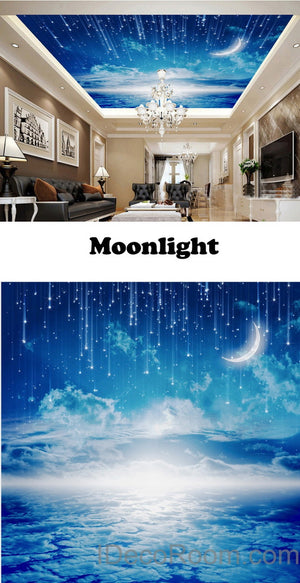
| Depth, architectural illusion, or a stronger focal point | 3D wall murals | Viewing distance, perspective direction, and whether furniture blocks the main effect |
| A sofa wall, media wall, or open-plan feature wall | living room wall murals | Seat height, glare, wall width, and whether the subject competes with the screen or artwork |
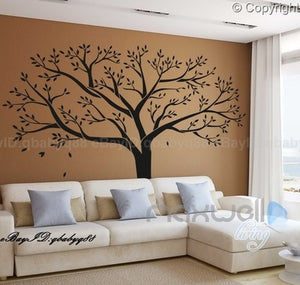
| Trees, flowers, botanical detail, or scenic outdoor subjects | forest, nature and flower wall murals | Color intensity, subject scale, and how much blank space the room needs |
| A particular subject, crop, size, or placement | custom wall murals | Exact wall dimensions, main subject position, and whether the image can be cropped cleanly |
Decide how much scale the room can handle
Scale matters more than keywords. A small repeating pattern can make a narrow hallway feel organized, while a single oversized blossom, arch, map, or galaxy can dominate a small room. In a larger room, the opposite problem appears: a design with tiny details may look flat from across the space.
For seating areas, stand where people usually sit and look at the wall. If the main subject would sit above eye level, choose a design with useful detail in the middle third of the wall. For bed walls, check the headboard height before choosing a mural with important detail near the bottom. For a kids room, leave room for storage and future furniture changes so the mural does not depend on one exact layout.
Use color as a room-planning tool
Color should connect the mural to the room rather than simply make the wall louder. If the furniture, rug, and curtains are already strong, use a mural with more open space or fewer competing colors. If the room is neutral, a forest, floral, 3D, or map mural can carry more of the visual weight.
Also consider light. A dark mural can look richer in a bright room but heavy in a small room with limited daylight. A pale mural can make a compact room feel lighter, but it may need enough contrast to avoid looking washed out beside white furniture.
Know when custom sizing or cropping is the better path
Custom sizing is most useful when the wall shape, subject position, or crop matters. A world map, doorway illusion, tree lane, large flower, or mural with a centered subject can look wrong if the important part is cut off. A custom decision should begin with the wall dimensions and the subject you want to keep visible, not just the largest available size.
If two designs seem equally appealing, choose the one that fits the wall's interruptions with less compromise. A scene with important detail spread across the whole image may survive a switch plate or narrow bookshelf better than a design with one centered subject. This is especially important for murals near doors, sloped ceilings, built-ins, or tall storage.
Use the custom collection as a starting point for designs that need a particular size or placement. Then check the individual product details before ordering. Do not assume that custom sizing changes installation requirements, surface suitability, or product properties unless the product page says so.
Check installation readiness before ordering
Installation readiness is part of choosing the mural. The public application page gives practical preparation steps: the wall should be dust free, smooth, and dry; smaller units may be easier to apply; and a card can be used to smooth bubbles. That language is useful because it turns the wall itself into a buying checkpoint.
If the wall is textured, damp, freshly repaired, blocked by furniture, or hard to access, solve that problem before choosing a complex mural. A simpler design may be more forgiving in a difficult room, while a detailed 3D or scenic design needs cleaner alignment and a more predictable wall.
Choose the next collection with a reason
After the room and wall are clear, browse one collection at a time instead of opening every category at once. Start with 3D designs if the room needs depth, living room designs if the seating layout is the main constraint, forest and flower designs if the room needs a natural subject, or custom mural options if the wall dimensions and image crop are the deciding factor.
If your design depends heavily on perspective, read the related 3D corner wall art placement guide before ordering. It is a better next step for corners and angle-sensitive murals than a general style article.
Final pre-order checklist
- The wall dimensions and obstructions are written down.
- The main subject will remain visible after furniture is in place.
- The mural category matches the room purpose, not just a search term.
- The color level works with the room's light and existing furniture.
- The product page and application guide have been checked before purchase.


 English
 French
 German
 Spanish