



 idecoroom@gmail.com
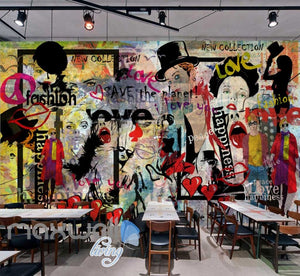
Graffiti wall decals work best in teen rooms, game rooms, and creative spaces when the wall has a clear purpose. The style is energetic, so the room needs a plan for color, scale, furniture overlap, and viewing distance. Choose one feature wall first, then decide how much of the design should be bold lettering, character art, abstract color, or perspective.
Choose the room role first
In a teen room, the mural often sits behind the bed, desk, or gaming setup. That means the bottom of the design may be partly covered by furniture, bedding, or a chair. In a game room, the mural may need to sit beside a screen, console shelf, or seating area without reflecting too much visual noise toward the viewer. In a creative room or small studio, the decal can work as a backdrop for a worktable as long as storage and pegboards do not hide the main artwork.
For younger spaces or shared playrooms, compare the energy level with kids wall murals before choosing the most intense graffiti style. The right answer may be bold, but it should still fit sleep, homework, play, and storage needs.
Also decide whether the mural should be a backdrop or the main subject of the room. A backdrop can sit behind a desk or bed with more open color and fewer tiny marks. A main-subject wall can use stronger lettering or character art, but it needs cleaner furniture in front of it so the room still feels organized.
Control color before adding more decor
Graffiti-style graphics can carry several strong colors at once. Pick one or two colors from the mural to repeat in bedding, desk accessories, game chairs, shelves, or posters. Keep the larger items around the wall simpler. If every object repeats the mural's full palette, the room can feel busy even when the decal itself is strong.
Neutral furniture helps a colorful wall feel deliberate. Black, white, gray, natural wood, or one restrained accent color usually gives the mural enough room. If the room already has bright gaming lights or many collectibles, choose a mural with larger shapes rather than tiny details.
Match scale to the viewing distance
A small bedroom wall can handle a strong decal when the design has a clear center and enough open space. A larger game room may need bigger lettering, broader shapes, or more depth so the mural does not disappear from across the room. If the artwork uses perspective, alley depth, or corner illusion, compare 3D wall murals and the related 3D corner wall art placement guide before choosing the final wall.
Use tape to mark the planned size on the wall. Then sit or stand where the room is used most. If the mocked-up area crowds the bed, desk, or screen, reduce the size or shift the decal. If the room has high ceilings or a long viewing distance, increase the scale rather than adding unrelated wall art around it.
Lighting changes the decision too. LED strips, monitor glow, and daylight from a side window can make bright colors feel stronger at night than they do in a product image. If the room uses colored lighting, choose a mural palette that can still read when the lights shift. A design with large shapes and clear contrast usually holds up better than a mural made only from small layered marks.
Keep this article distinct from other graffiti topics
This refresh is for teen rooms, game rooms, and creative spaces. It is not the personalized graffiti article, which should focus on names, colors, and custom self-expression. It is also not the later urban accent-wall article, which should serve adult lofts, apartments, and smaller modern spaces. Keeping those angles separate helps each article answer a real decision instead of repeating the same urban-style language.
Check the wall and application source
Before ordering, measure the usable wall area and note outlets, trim, door swing, shelves, and furniture height. IDecoRoom's current application instructions say the wall should be dust-free, smooth, and dry before application, and they describe using a card to smooth bubbles. Read the wall mural application guide before installing. This draft does not make a removable or damage-free promise, and it does not claim street-art authenticity.


 English
 French
 German
 Spanish