


 idecoroom@gmail.com
Choose a night sky wall mural by deciding how dark, detailed, and immersive the room can handle. A bedroom, nursery, kids room, or media space may all use moon, star, galaxy, or space imagery, but each room needs a different balance of color depth, image scale, visible wall area, and installation readiness.
This guide helps compare night sky and space mural directions without making sleep, wellness, glow, material, or nursery-suitability claims. The linked collections are category examples only. They show relevant browsing paths, not evidence for every product property, surface result, stock, price, or installation outcome.
Separate night sky mood from broader space themes
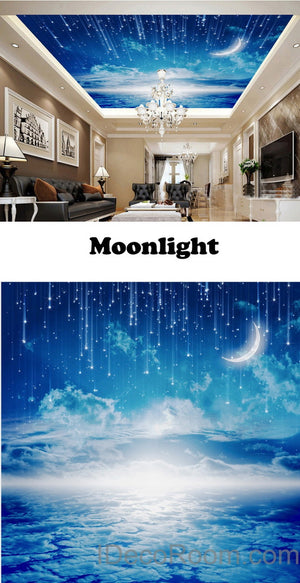
Night sky murals usually focus on stars, moonlight, clouds, deep blue color, planets, or a soft galaxy effect. Broader space murals may include astronauts, rockets, planets, nebula scenes, or bolder science-fiction energy. The distinction matters because a room that needs a quiet backdrop may not want the same visual strength as a playroom or media wall.
Start by naming the job of the wall. It may need to make a bed wall feel finished, add a soft ceiling-to-wall atmosphere, give a kids room a space theme, or create a deeper media-room backdrop. Once the job is clear, choose the mural by color depth and scale instead of choosing the most dramatic image first.
Match color depth to light and room size
Dark blues, black skies, and high-contrast galaxy scenes can look rich in a bright room or a media space, but they can feel heavy on a small wall with limited daylight. Softer moonlight, pale clouds, or lower-contrast stars can be easier for a nursery or compact bedroom. The decision is not about which image is most impressive in isolation; it is about how the wall will feel with the room's light, bedding, storage, and furniture.
- Use deeper color when the room has enough light, distance, and simple surrounding decor.
- Use softer contrast when the room is small, already patterned, or filled with furniture.
- Check evening lighting if lamps, screens, or colored bulbs will change how the mural reads.
- Keep the darkest part of the image away from areas where the room already feels visually tight.
Choose the feature wall by what stays visible
Measure the full wall width and height, then mark the bed, crib, dresser, shelves, desk, sofa, screen, or storage that will sit in front of the mural. The usable image area is what remains visible after the room is furnished. A moon, planet, constellation area, or horizon line can lose its role if it lands behind furniture.
For a bed wall, check headboard height and the height of bedside objects. For a nursery wall, think about furniture that may change later. For a kids room, choose a composition that can still make sense if storage or desks move. For a media room, avoid placing the strongest image detail where the screen or speakers will compete with it.
Compare room types before browsing
| Room type | Useful category path | Planning priority |
|---|---|---|
| Bedroom or media room | space wall murals | Choose color depth and focal scale based on light level and viewing distance. |
| Nursery or early-childhood room | nursery wall murals | Favor a calmer crop, enough open space, and visible detail above furniture height. |
| Kids bedroom, playroom, or study corner | kids wall murals | Decide whether the wall should support a space theme, play energy, or a quieter backdrop. |
For child-facing rooms, keep the distinction clear: this is room-planning guidance, not a safety certification or material claim. Use the collection pages to compare visual categories, then check the individual product page before purchase.
Plan image scale before choosing a final crop
A star field can tolerate more cropping than a mural with one large moon, planet, rocket, window, or horizon line. If the design has one main object, place that object where furniture will not cover it. If the design is an all-over sky, decide whether the room needs a dense field of stars or more open dark space.
Stand at the doorway, then at the bed, crib, sofa, or desk position. From the doorway, the mural should read quickly. From inside the room, it should still have enough detail to feel intentional. If the room is narrow, a simple night sky with a clear focal area may work better than a complex galaxy with many small details.
Use custom sizing when the wall shape controls the result
Compare custom wall murals when a night sky image needs a particular width, height, or subject position. This is especially useful around sloped ceilings, closet doors, built-ins, windows, or feature walls where the moon or main sky detail must land in a specific zone.
Custom planning should start with exact wall dimensions and the part of the image that must remain visible. It should not be treated as a promise about every image request, installation condition, or product property. If the image source comes from outside the site, confirm that the artwork can be used and cropped cleanly before planning the room around it.
Coordinate the mural with bedding, storage, and ceiling color
Night sky imagery often brings strong blue, black, purple, grey, or white contrast. Repeat one or two of those colors in bedding, rugs, curtains, or small decor so the wall feels connected to the rest of the room. If the room already uses strong patterns, choose a simpler mural or keep adjacent textiles quieter.
Ceiling color also changes the effect. A dark star wall beside a bright white ceiling can create a sharp line. That may be useful in a media room, but it can feel abrupt in a softer bedroom. A mural with clouds, lighter gradients, or more open space can bridge the transition if the ceiling and furniture are light.
Check installation readiness before choosing a complex sky
The current wall mural application guide says the wall should be dust-free, smooth, and dry before application, and it describes using a card to smooth bubbles. Use those points as preparation checks before ordering, especially for darker images where bubbles, wall interruptions, or alignment problems may be easier to notice.
If the wall is textured, damp, freshly patched, blocked by furniture, or interrupted by trim and fixtures, address those issues before choosing a detailed mural. A simpler star field may be more forgiving than an image with one precise moon, window, or planet alignment.
Compare with adjacent guide paths
If you are still comparing style, wall size, custom crop, and installation readiness across many mural types, start with the wall mural buying guide. It provides the broader room-and-wall framework before you narrow the theme.
If the room could also use castles, woodland scenes, storybook imagery, or broader imaginative subjects, compare the related fantasy wall mural style guide. Keep this night sky page for moon, star, galaxy, and space-room decisions.
Night sky mural checklist
- The room type and wall job are clear before browsing.
- The color depth works in both daylight and evening light.
- The main sky detail remains visible above beds, cribs, screens, or storage.
- The design is compared through approved collection paths, not unsupported product claims.
- The product page and application guide are checked before ordering.


 English
 French
 German
 Spanish