


 idecoroom@gmail.com
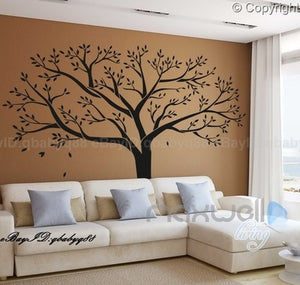
Choose fantasy wall murals by deciding what kind of imagination the room needs: quiet woodland, storybook nursery, bold game-room scene, dreamy bedroom feature wall, or a custom image crop. The theme can be expressive, but the room still has practical limits. Wall size, color intensity, furniture height, and the main viewing position should lead the decision.
Use the linked collections as category examples only. They help compare kids, nursery, nature, and custom directions, but they do not prove product-specific material, surface, safety, stock, price, or installation results. Check the individual product page and the application guide before purchase.
Define the mood before choosing the subject
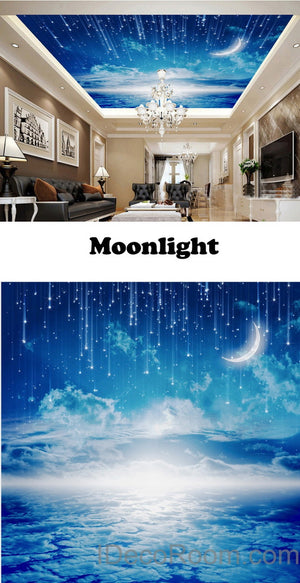
Fantasy can mean many things: enchanted forest, moonlit sky, fairy-tale architecture, clouds, castles, animals, abstract dream color, or a soft nature scene that feels imaginative without being literal. Start with the mood, then choose the subject. This keeps the mural from becoming a random dramatic image that does not support the room.
For a bedroom, the mood may need to be calmer and less saturated. For a kids room or playroom, the mural can be more playful, but it still has to work with storage, bedding, desks, and floor space. For a shared family feature wall, choose a fantasy direction that can live with furniture and everyday lighting rather than relying only on novelty.
Choose color intensity by room use
Color is the fastest way for a fantasy mural to change a room. Deep blues, purples, greens, and high-contrast scenes can create drama, but they may feel heavy in a small room with limited daylight. Pale skies, open forests, soft florals, and muted storybook colors can keep the wall more flexible. Bright color can work when the surrounding furniture stays simple.
Look at the room in morning light, afternoon light, and evening light if possible. A color that feels balanced during the day can become dominant at night near lamps, screens, or colored bulbs. If the room already contains patterned bedding, toys, posters, or bookcases, choose a mural with larger shapes and more breathing room.
Match fantasy directions to the room
| Room or use case | Useful category path | Decision to make first |
|---|---|---|
| Kids bedroom, playroom, or study corner | kids wall murals | Decide whether the wall should support play, reading, sleep, storage, or a mix of those uses. |
| Nursery or early-childhood room | nursery wall murals | Choose a calmer color level and keep the strongest detail away from the area that furniture will cover. |
| Woodland, floral, garden, or nature-based fantasy | forest, nature and flower wall murals | Decide whether the room needs a scenic background, a botanical focal point, or a softer organic mood. |
For child-facing rooms, keep the claim boundary clear. This guide does not make safety certification or material claims. It only helps choose mood, color, scale, and placement based on the visible room planning problem.
Plan image scale around furniture
A fantasy image can lose its story if the main character, path, moon, tree, arch, or horizon line is covered. Measure the wall, then mark the bed, crib, dresser, shelves, desk, toy storage, sofa, or chair that will sit against it. The usable mural area is the part that remains visible after those objects are in place.
For a bed wall, check headboard height before choosing a mural with important detail near the bottom. For a nursery wall, think about the height of a crib, changing table, dresser, and future storage. For a playroom, choose a composition that can survive furniture changes. A mural with a single centered subject may be less flexible than one with useful detail spread across the middle of the wall.
Use custom crop when the story depends on placement
Fantasy murals often rely on composition. A doorway should not be cut off by a real door. A moon should not disappear behind a shelf. A forest path should not start below a bed. If the room shape, wall size, or subject position matters, compare custom wall murals as a planning path for size and crop questions.
Custom planning should begin with exact wall dimensions and the part of the image that must remain visible. It should not be treated as a blanket promise about every image, request, or product property. If the design depends on artwork supplied from outside the site, the image source and permission should be checked before use.
Keep the design readable from the doorway
Fantasy walls are often viewed first from a doorway or hallway. Stand there and ask what the mural will say in the first two seconds. If the design has too many small details, the room may feel cluttered before anyone sees the subject. If the wall has one large, clear shape, it can read well even when toys, bedding, or shelves are present.
Then test the main sitting or lying position. A mural behind a bed is mostly a backdrop from inside the room. A mural opposite the bed or seating area is something people look at for longer, so it can carry more detail. A mural beside a desk should support focus rather than crowd the work area.
Leave flexible room edges
Fantasy rooms often change faster than formal living rooms. A nursery may later need a bed, a playroom may add shelving, and a bedroom may gain a desk or larger storage. Leave some calmer visual space near the edges of the mural so future furniture can change without cutting through the most important part of the scene.
This is especially useful when the mural wraps near a closet, sloped ceiling, window, or door. A design with open sky, forest background, or soft texture near the edges can adapt better than a close crop with important figures at every border. If the wall is likely to change, choose the mural that still makes sense when the room is rearranged.
Compare fantasy with adjacent guide paths
If you are still deciding between a fantasy wall and a broader room-planning framework, use the wall mural buying guide. It covers room fit, wall measurements, image crop, and installation readiness before ordering.
If the fantasy idea is specifically moon, star, galaxy, or dark-sky themed, the related night sky mural room guide is the better next article. That guide owns the narrower night-sky and space planning question, while this page stays focused on broader fantasy mood and room fit.
Check the wall before installing
The current wall mural application guide says the wall should be dust-free, smooth, and dry before application, and it describes using a card to smooth bubbles. Use those points as preparation checks, especially for large fantasy scenes where alignment and clean wall access matter.
If the wall is textured, damp, freshly patched, blocked by large furniture, or interrupted by switches and trim, address those constraints before choosing a detailed mural. A simpler scene may be more forgiving than a complex story image when the room has many interruptions.
Fantasy mural checklist
- The room mood is named before the subject is chosen.
- The color level works in both daylight and evening light.
- The main image remains visible above beds, cribs, desks, or storage.
- The collection path is used as a category example, not as a product-performance claim.
- The product page and application guide are checked before ordering.


 English
 French
 German
 Spanish